
The hottest new bipartisan issue
Americans are united in their opposition or skepticism of AI data centers
To those who say unifying the country is impossible, take note. Opposition to AI data centers is the "most bipartisan issue since beer."
Anger around data centers planned for dozens of cities and towns is palpable on both sides of the aisle. Polls shows 70+ of Americans oppose the massive energy centers the size of 32 football fields.
AI data centers are expected to raise electricity and water costs for the residents of the town or city. Homeowners near the sites are also, understandably, worried their property values will go down.
The out-of-state companies involved are being secretive in some cases—not alerting residents of their plans to enter their backyards. Such hubris, along with the price tag and environmental impacts, are getting all sorts of folks riled up.
The AI industry and others, including unions, claim jobs will be created with the construction and use of these massive facilities. It’s too early to know if that’s the case.
Many aren’t wanting to ban outright the data centers. They are instead pushing for guardrails and common sense regulations to make the centers better economic stewards, if not neighbors.
Read more: NYT, PBS Newshour
The need for a new civil rights movement
The need follows the Supreme Court dismantling the landmark Voting Rights Act of 1965
Last week, the U.S. Supreme Court ruling effectively killed the Voting Rights Act of 1965. Congress passed this landmark law four decades ago to stop racial discrimination in voting.
The conservative majority on the Court pulled up decades-old roots, it said, because racial discrimination in elections — which this country has a long history with— is largely over. Six unelected figures on the Court determined that Black Americans no longer need legal protections to ensure they can vote freely and fairly.

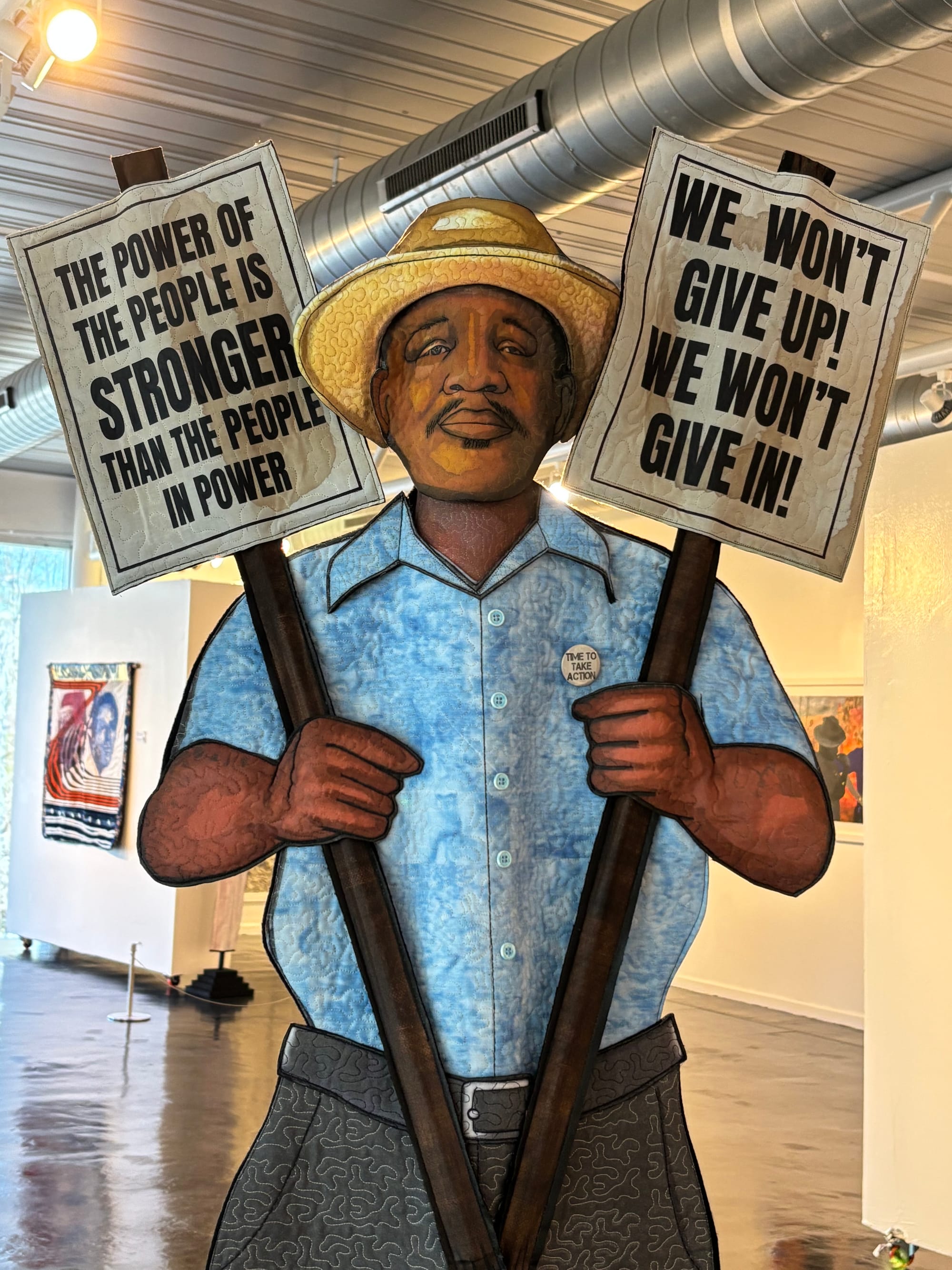
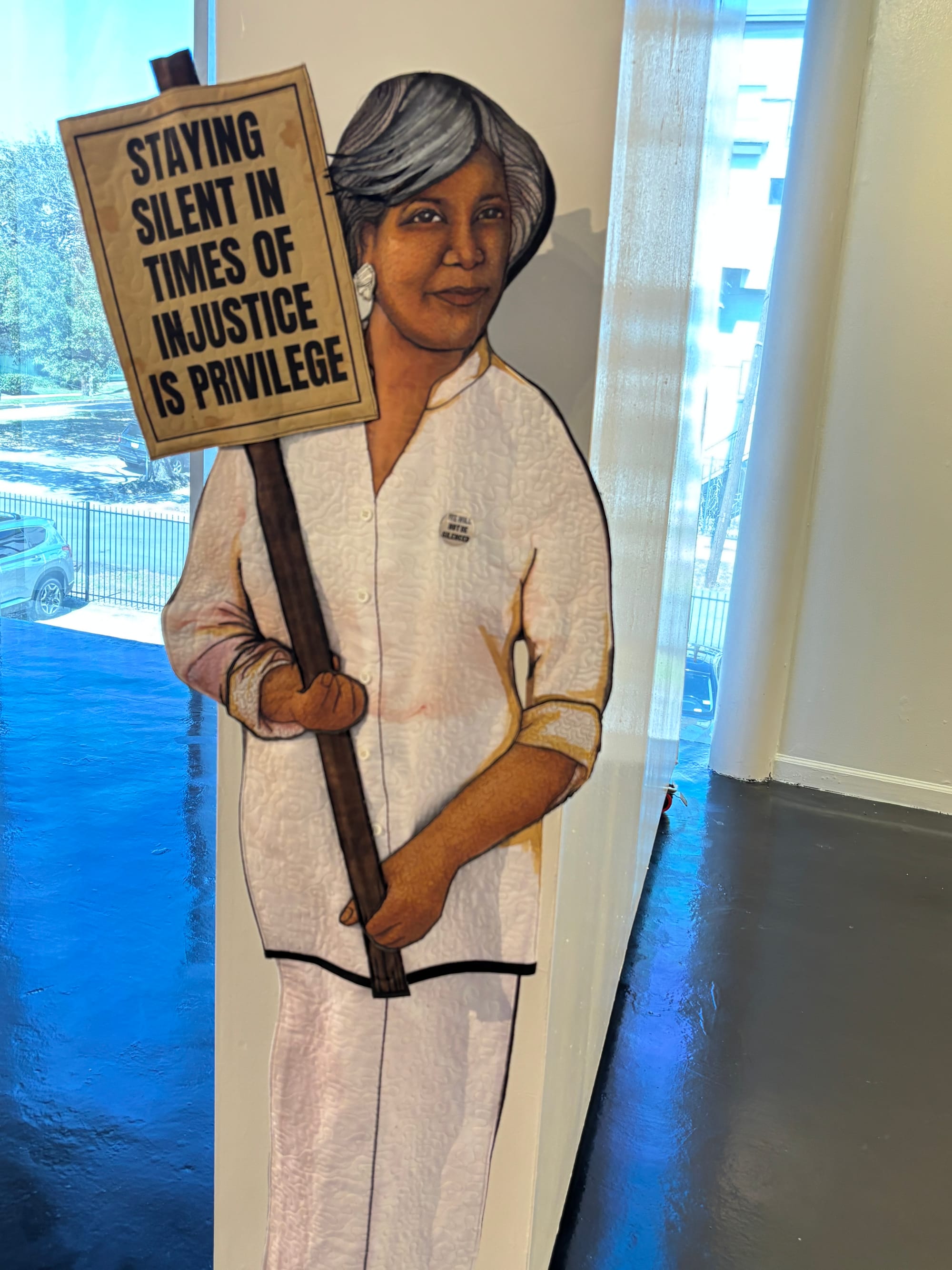
Houston Museum of African American Culture/ Kevin Nix
Conservative lawmakers have pushed for a slew of new laws in recent years at making it harder for Black Americans— non-white voters, really—in Southern states to vote.
A number of civil rights leaders and groups, as well as President Barack Obama, have called for a new civil rights movement over the past decade.
The most immediate step in any modern civil rights movement--beyond sketching out a 10-year policy, communications, and electoral plan – would leverage this fall's elections.
Black voters are the backbone of the Democratic Party. Will the party move to make Black Americans’ freedom to vote a centerpiece in the fall elections, in addition to the sputtering economy? Or should the cost of living, for now, remain the sole focus, given that’s the overriding concern of most voters?
Early in his second term, President Trump cut $1.8 billion cut to scientific research funding that will impact breakthroughs in areas like cancer and Alzheimer’s research. During that funding fight, and after the cuts, there was shock, awe, and whiplash.
As Josh Marshall at Talking Points Memo put it, “The world of biomedical research has close to no experience operating in a political context—and especially in the context of mass politics...The White House has relied on researchers’ unfamiliarity with political fights, using their sole reliance on bureaucratic channels of funding and review — which the universities and the federal government set up together going on a century ago — against them.”
Marshall notes that when the general public finds out about what’s happening to cancer and Alzheimer’s research, “[T]hey get mad. That, quite simply, is political power for good.”
But the scientific community hasn’t been leveraging its political power.
In recent years, a pocket of the right wing, including Steve Bannon, Roger Stone, and Elon Musk, targeted Dr. Peter Hotez, the renowned vaccine expert. It was part of the larger anti-vaxxer political movement that has grown considerably and begun to shift a slice of public opinion against vaccines.
The percentage of Americans who believe childhood vaccinations are important dropped 18 points in five years. That’s a spectacular drop in support from 2019 to 2024.
Many scientists will balk at being political. But having political savvy means communicating a clear message to win people over. It means defending science from attacks and showcasing the vital role science plays in our lives. All of this “political” work can be done without being partisan.
"Defending" science in the public sphere means talking about it in the most effective way. The science brain is trained on data and evidence—as it should be. But everybody else’s brain is wired for stories.
And that’s where the disconnect is —and where those who oppose vaccines or discredit climate science are finding a foothold. Anti-vaxxers are out-communicating the pro-vaccine/ pro-science contingent.
A 2017 piece in Slate by Tim Requarth of the NYU Grossman School of Medicine has stuck with me all these years later. “[T]he obstacles faced by science communicators are not epistemological but cultural,” Requarth wrote. “The skills required are not those of a university lecturer but a rhetorician.”
Professions like science tend to skip the step between the proverbial research lab and the public marketplace. They forgo the translation process — the process smart politicians and businesses do —required to bring data-backed ideas to market.
I thought it might useful to look at how, in a general sense, to make political change. By that I mean changing minds on issues followed by changing laws. Culture is a part of this, too.
There’s a rough playbook, or more like a roadmap.
Mass political and social movements have a long, rich history in the United States, the most famous and successful being the 1960s civil rights movement. Some of that progress is being undone today, no question. But over four decades, giant leaps forward for racial equality of Black Americans were made. It remains a template.
The clarion call for the marriage of gay couples in the 2010s was another wildly successful change effort that took decades before hitting its 110 mph stride in the 2010s in state legislatures, on the ballot, and in the courts.
The movements for gun violence prevention–and for increased gun rights and access– have both been successful, but the latter continues to prevail, at least in terms of public policy.
The MAGA movement, and its antecedent, the 2010 Tea Party, has grown relatively fast over a decade-plus, not just electorally and legislatively but culturally. That movement hit its zenith in the 2024 presidential election.
All of these movements, and others, have had enormous advocacy campaigns behind them. None of these issues or trends came out of the blue. A campaign mindset, strategy, and structure has led to tangible outcomes.
Georgetown Business School professor Leslie Crutchfield studied a range of social/political movements in the U.S. In her 2018 book, she found that “winning movements made their destinies come true, rather than being destined to succeed.”
Crutchfield found patterns in successful movements, including:
- Change came from the bottom-up–at the grassroots level. Winning movements took their campaigns to all fifty states with their change campaigns, rather than going for national change at the start. Small wins create momentum, which is the holy grail of any growing movement.
- Persuasion. Great social change leaders marry policy reform and changing people’s minds.
- Leaders check their egos and organizational identities at the door, even if for a minute. This allows (if only temporarily) the messiness of factions within a movement to come together around a common agenda.
- The management structure is a hybrid. Crutchfield writes, “Instead of small handfuls of elites dictating to troops from the top down or an amorphous mob of activists genuflecting for change from the bottom up, the most effective movements find balance between the ‘leaderless’ and ‘leader-led’ extremes.”
I would add elections to this list. Putting the right people in office who agree with your issues is vital.
Of course, individual dynamics, politics, media landscape, and tech tools have changed over time. But how to go about strategically building an effective movement hasn’t.
I’ve been wondering how the federal government‘s autocratic tendencies, as well as the heavy hand of some state governments, alters the general roadmap for movements within our democracy, if at all. It’s an area for further research.
Messenger matters
I’ve never watched a two-person press conference on the same subject where I believed 95% of what one person said and not believe 95% of what the other person said.
The Secretary of Defense and the Chairman of the Joint Chiefs of staff held their third news gaggle to say the military component to the Iran war was paused. The U.S. and Iran have agreed to a two-week ceasefire to give the diplomacy a chance.
The news was certainly good. But outside of the headline here, I believed almost nothing Pete Hegeseth said.
It’s my third time watching these Pentagon joint briefings and the third time I’ve walked away in disbelief.
Secretary Hegseth goes to obvious pains to lather public praise on his boss. His autocratic affect takes away from his message. (Or is that the message?)
He speaks in hyperbole, replacing the incredible complexity and nuance of a war with over-the-top macho talk. This is not the stuff of a confident leader.
His odd cadence – and defensive and combative tone– doesn’t match the seriousness of the topic at hand.
Declaring victory, as Hegseth did this morning, is premature. No one knows if the ceasefire will hold and if the war will actually come to an end after diplomatic talks.

To Hegseth’s left, at the other microphone, was Dan Caine. He had command of the facts, the situation, and the room.
He used qualifiers and was cautious, something the fog of war demands.
Caine understands who the commander in chief, his boss, is, but doesn’t feel the need to perform or sycophant out.
He honors the military and has a sense of seriousness.

Democrats’ opportunity with AI
Dismissing AI as a media tool is like rejecting the use of radio for electioneering in the 1930s and 40s.
Companies heavily invested in the growth of artificial intelligence need more compute power. They are going to look for it in small towns and major cities across the country. Hundreds of projects are in the works to build data centers to provide amounts of power that are hard to imagine.
Citizens aren't loving these companies coming into their backyards. Why? The worry their utility bills, from electricity to water, will increase somewhat substantially.
It should go without saying: The AI industry should be paying for its own increased energy use--not the residents of a city. AI platforms are siphoning off significant amount of public resources--like from an electric grid and water supplies. That makes it a public policy and political issue.
A Pew poll published in March showed people in both parties--though Democrats more so--are concerned about rising costs, the environment, and quality of life when it comes to data centers.
Maine passed a temporary ban on large data centers this year. A majority in Wisconsin think the costs of data centers outweigh the benefits.
Needless to say, the AI titans are facing a messaging challenge with data centers. That's why Meta launched an ad campaign earlier this year. The core message was jobs—a tough sell. Overlaying AI's cost on top of the already poor economy isn't playing well. (See Blue Rose Research)
The data center issue, for now, is up for grabs. Either party could take the lead against AI cost increases to the taxpayer.
AI as a campaign tool
It's a different story when it comes to using AI as a tool for branding and ad creation in the campaign world. Republicans, who have embraced AI, seem to have to advantage.
With some exceptions, professional Democrats have expressed reservations about the technology.
"Democratic operatives — many wary of privacy risks and worried what AI could mean for their jobs — have been much slower to adopt the technology in their campaigns," Axios reported.
The National Democratic Training Committee (NDTC) has developed a playbook for how Democratic campaigns use AI. That playbook, Wired found, “points out ways Democrats shouldn’t use AI and discourages candidates from using AI to deepfake their opponents, impersonate real people, or create images and videos that could ‘deceive voters by misrepresenting events, individuals, or reality. This undermines democratic discourse and voter trust,’ the training reads.”
Small “d” democratic discourse has already been undermined by social media, the cable news, and Donald Trump.
Dismissing the emergence of new media and tech tools for campaigning today is like rejecting the use of radio for electioneering in the 1930s and 40s.
I'm all about reigning in AI as a policy matter. It needs governance that protects innovation and the tech's immense potential. But do that legislatively. Not during the most important election of our lifetimes.