
On the Issues
The need for a new civil rights movement
The need follows the Supreme Court dismantling the landmark Voting Rights Act of 1965
Last week, the U.S. Supreme Court ruling effectively killed the Voting Rights Act of 1965. Congress passed this landmark law four decades ago to stop racial discrimination in voting.
The conservative majority on the Court pulled up decades-old roots, it said, because racial discrimination in elections — which this country has a long history with— is largely over. Six unelected figures on the Court determined that Black Americans no longer need legal protections to ensure they can vote freely and fairly.

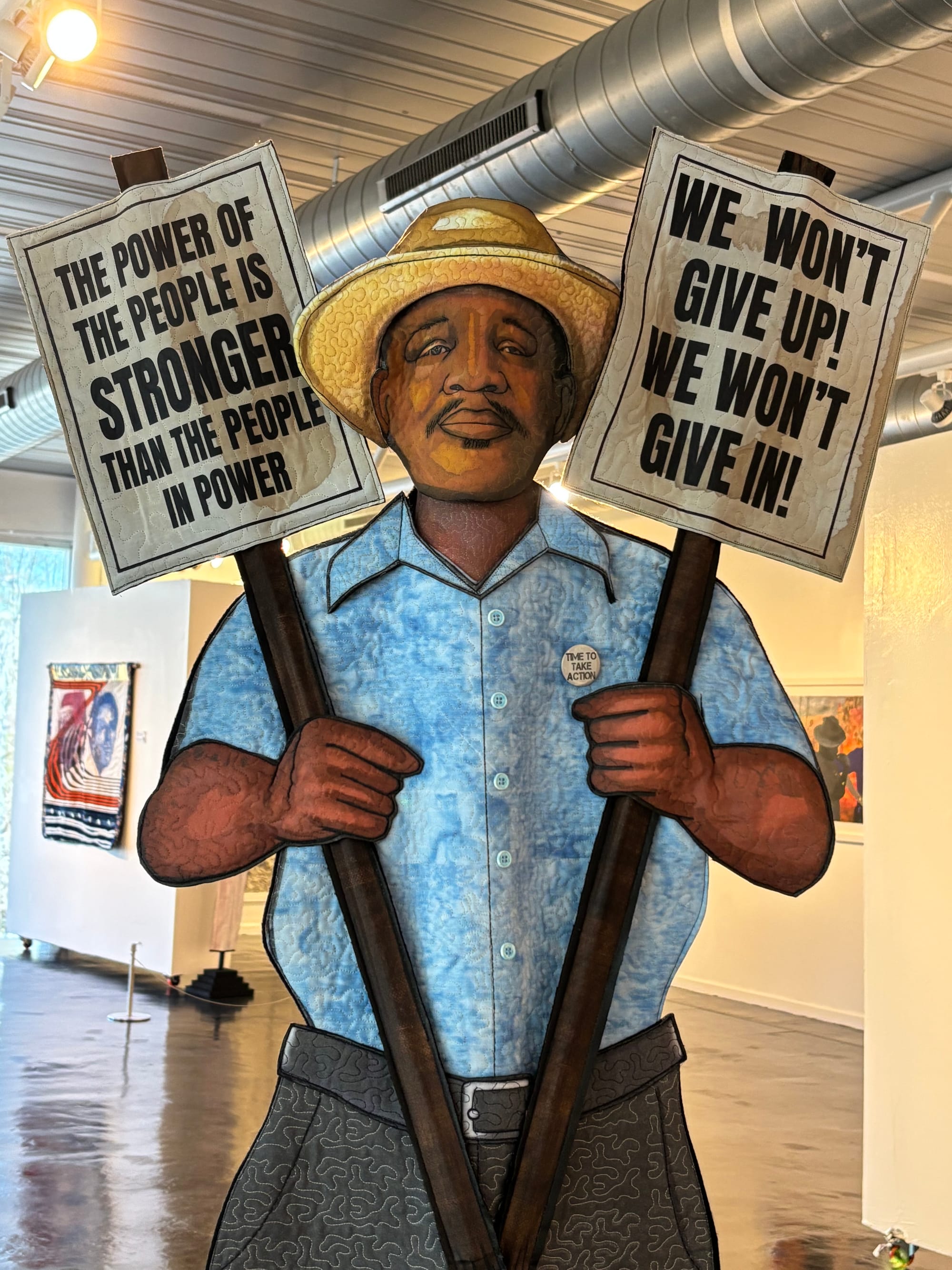
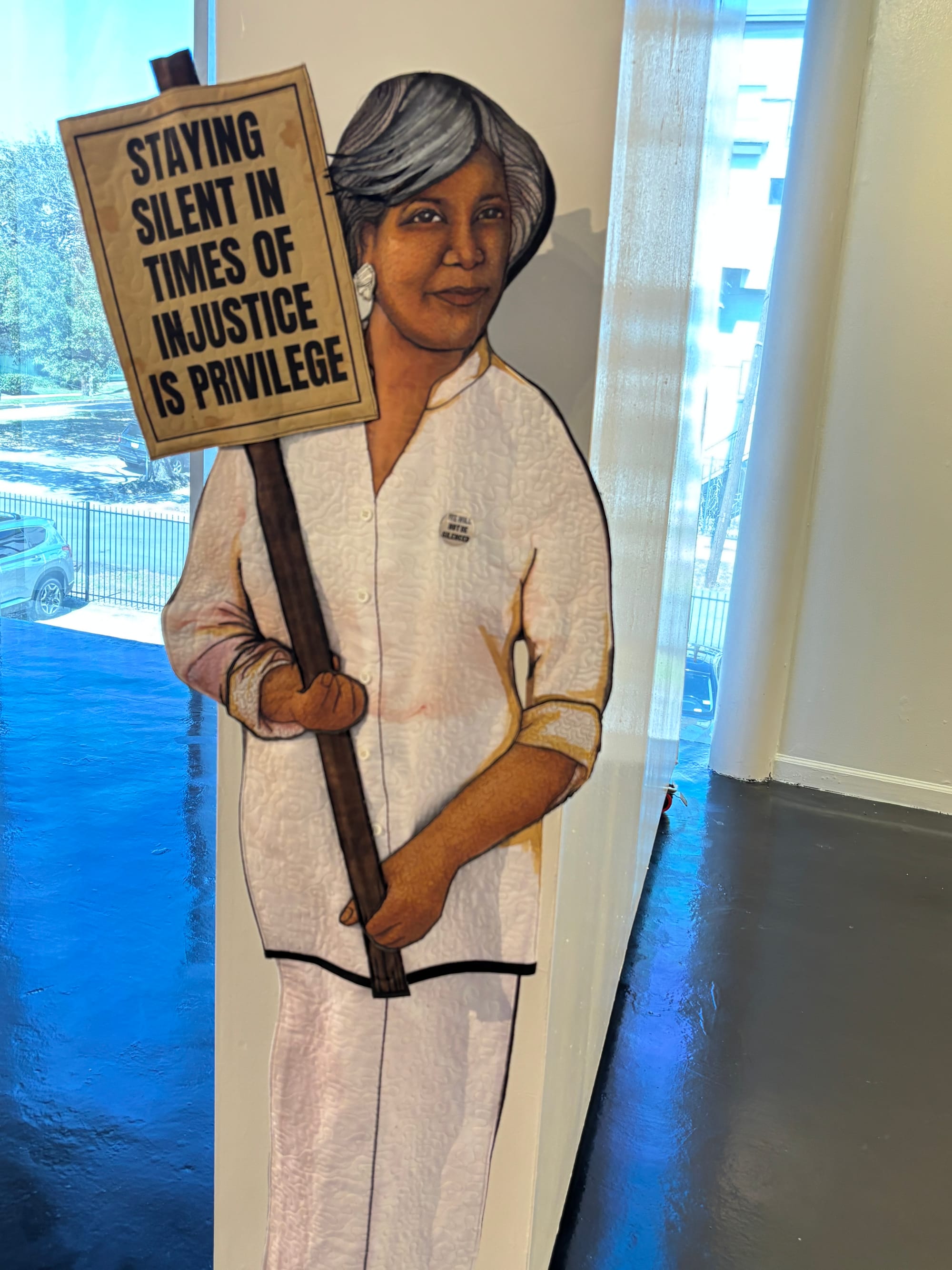
Houston Museum of African American Culture/ Kevin Nix
Conservative lawmakers have pushed for a slew of new laws in recent years at making it harder for Black Americans— non-white voters, really—in Southern states to vote.
A number of civil rights leaders and groups, as well as President Barack Obama, have called for a new civil rights movement over the past decade.
The most immediate step in any modern civil rights movement--beyond sketching out a 10-year policy, communications, and electoral plan – would leverage this fall's elections.
Black voters are the backbone of the Democratic Party. Will the party move to make Black Americans’ freedom to vote a centerpiece in the fall elections, in addition to the sputtering economy? Or should the cost of living, for now, remain the sole focus, given that’s the overriding concern of most voters?
Early in his second term, President Trump cut $1.8 billion cut to scientific research funding that will impact breakthroughs in areas like cancer and Alzheimer’s research. During that funding fight, and after the cuts, there was shock, awe, and whiplash.
As Josh Marshall at Talking Points Memo put it, “The world of biomedical research has close to no experience operating in a political context—and especially in the context of mass politics...The White House has relied on researchers’ unfamiliarity with political fights, using their sole reliance on bureaucratic channels of funding and review — which the universities and the federal government set up together going on a century ago — against them.”
Marshall notes that when the general public finds out about what’s happening to cancer and Alzheimer’s research, “[T]hey get mad. That, quite simply, is political power for good.”
But the scientific community hasn’t been leveraging its political power.
In recent years, a pocket of the right wing, including Steve Bannon, Roger Stone, and Elon Musk, targeted Dr. Peter Hotez, the renowned vaccine expert. It was part of the larger anti-vaxxer political movement that has grown considerably and begun to shift a slice of public opinion against vaccines.
The percentage of Americans who believe childhood vaccinations are important dropped 18 points in five years. That’s a spectacular drop in support from 2019 to 2024.
Many scientists will balk at being political. But having political savvy means communicating a clear message to win people over. It means defending science from attacks and showcasing the vital role science plays in our lives. All of this “political” work can be done without being partisan.
"Defending" science in the public sphere means talking about it in the most effective way. The science brain is trained on data and evidence—as it should be. But everybody else’s brain is wired for stories.
And that’s where the disconnect is —and where those who oppose vaccines or discredit climate science are finding a foothold. Anti-vaxxers are out-communicating the pro-vaccine/ pro-science contingent.
A 2017 piece in Slate by Tim Requarth of the NYU Grossman School of Medicine has stuck with me all these years later. “[T]he obstacles faced by science communicators are not epistemological but cultural,” Requarth wrote. “The skills required are not those of a university lecturer but a rhetorician.”
Professions like science tend to skip the step between the proverbial research lab and the public marketplace. They forgo the translation process — the process smart politicians and businesses do —required to bring data-backed ideas to market.
Conservative gains on four issues
A look at DEI, “rigged” elections, immigration, and vaccines
Conservatives build their own media ecosystem. They define issues early, frame them in emotionally resonant terms, and push the narrative they want out there relentlessly. Conservative streamers are in their heyday.
Meanwhile, the progressive and center left— at a structural disadvantage in the media and perennially on defense—too often respond late, not at all, or not with enough brute force to be heard.
Here are three issue areas where the left—and at times the mainstream position— has lost the narrative. (Note: I’m only talking about the storyline itself—not policy positions.)
On DEI
Trump and his acolytes have made it a mission to get rid of diversity, equity, and inclusion in government and corporate America. For years, conservative influencers like Robby Starbuck and Christopher Rufo on Substack have negatively branded DEI as “woke”—a proxy for fairness and inclusive policies. Both of these guys have created toxic vibes in the business world around DEI, even before President Trump’s anti-DEI executive order. The end result of this work has been a roll back of DEI policies in the federal government and some major companies– or a more quiet approach to pursuing such policies. In one way or another, a silence has fallen in many–though not all- quarters.
On Democracy
MAGA has successfully raised doubts about the integrity of our election system. This is a shining example of completely making something up and spoon feeding it to people enough that huge chunks of voters, about a third of the country, believe it. Painting free and fair elections in the U.S. as not free or not fair – generally fraudulent– is one of those most successful campaigns to move public opinion from zero people believing something to tens of millions, in the Republican Party. Most Americans don’t believe the ‘20 election was stolen, but a striking number do.
On Vaccines
The campaign against science and scientists isn’t new. But in recent years a pocket of the right wing, including Steve Bannon, Roger Stone, and Elon Musk, targeted Dr. Peter Hotez, the renowned pediatrician in Houston. The anti-vaxxers political movement has grown and begun to shift a slice of public opinion against vaccines. The percentage of Americans who believed childhood vaccinations was important plummeted by 18 points in five years—from 2019 to 2024.